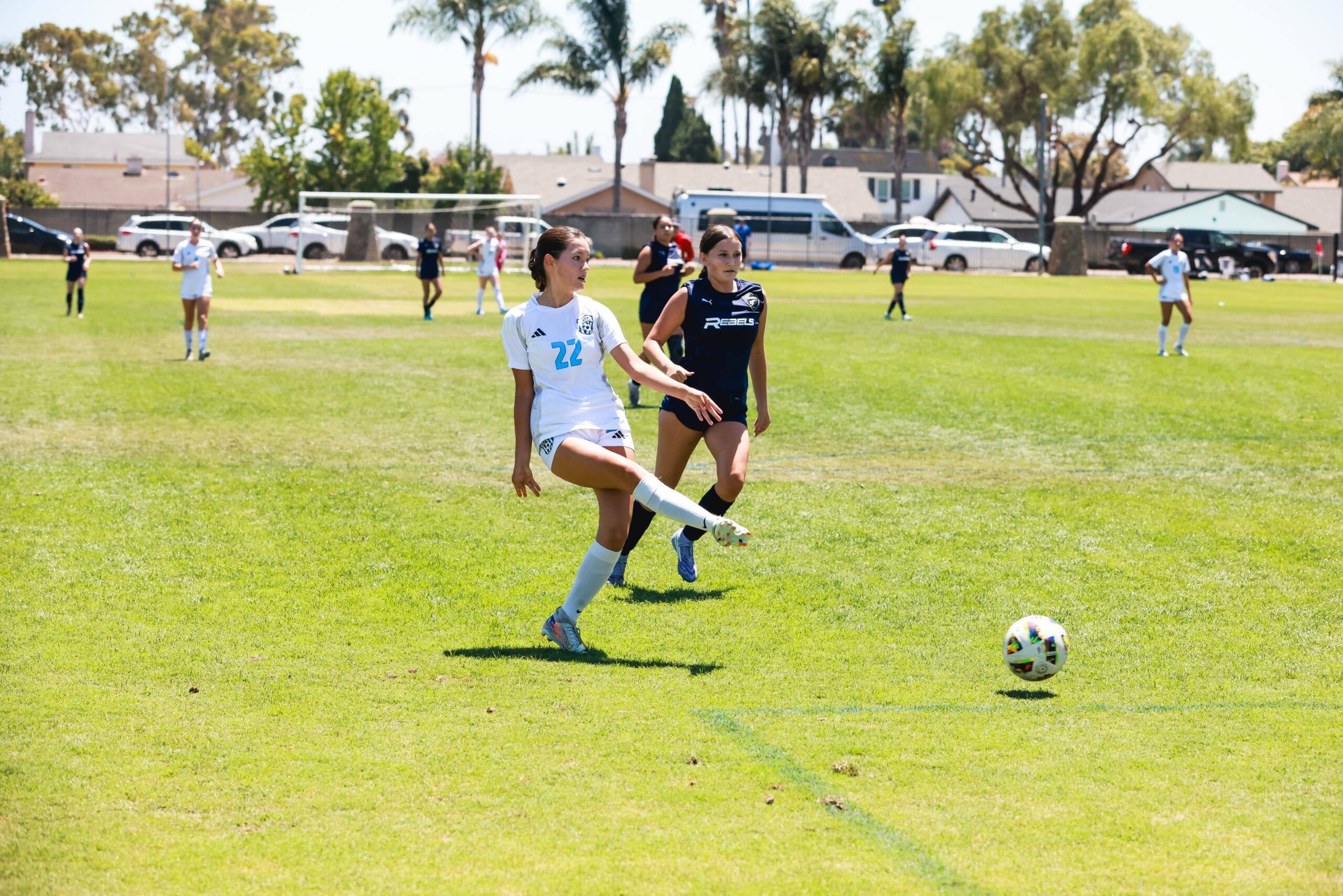
We have all seen it — a beautiful Saturday morning, a 50/50 ball or even a 60/40 ball that our player should win, and then nothing. Our player slows down or even stops for no apparent reason. They could have gotten the ball, but chose not to. The sideline goes crazy, the coach puts his hands on his hips, and the player stands frozen as the other team goes on the attack. The question is: why?
If you spend enough time watching high-level soccer — really observing, not just following the ball — you notice something subtle yet powerful. The best players don't just move faster. They see faster, process faster, and, most importantly, act before everyone else even realizes what's happening.

There's a framework from the military that explains player decision-making with surprising clarity: the OODA Loop. Developed by U.S. Air Force Colonel John Boyd, it breaks decisions into four steps: Observe, Orient, Decide, and Act. Boyd's insight was that the best performers win not because of superior equipment, but because they move through these steps faster and with more clarity.
If you want to go deeper into Boyd's thinking and how the OODA Loop has been applied beyond the military, this book is a great starting point: Boyd: The Fighter Pilot Who Changed the Art of War.
Now bring that idea onto a soccer field. Every player, at every moment, is running their own version of this loop. They're taking in information (Observe), making sense of it based on experience and positioning (Orient), choosing an option (Decide), and then executing (Act). Then they immediately start over again. The game isn't just physical — it's a constant cycle of decisions happening in real time.
Here's the problem: most youth development environments heavily emphasize the last step — Act. We work on technique, repetition, and execution. Passing drills. Shooting reps. First touch work. All valuable, but they only address the end of the process. The real separation between players often happens earlier, in how quickly and effectively they move through Observe, Orient, and Decide.
That's exactly where The Playmaker's Advantage by Leonard Zaichkowsky and Daniel Peterson adds another layer to this conversation. The authors dig into why certain players seem to have more time on the ball, more options, and more creativity. The answer isn't that the game slows down for them — it's that they're processing it faster and more completely than everyone else.
Elite playmakers scan more often, pick up earlier cues, and recognize patterns others miss. In OODA terms, they're better at observing and orienting, which gives them a head start on decisions and makes their actions seem effortless. What we call "vision" is really just a more advanced, efficient loop.
You see this play out every weekend. Two players receive the same pass in similar situations. One takes multiple touches, hesitates, and gets closed down. The other already knows where the ball is going before it arrives. The difference isn't just skill — it's preparation within the loop. The second player has already observed and oriented before the ball even gets there, so the decision and action happen instantly.
Where this becomes especially important for parents and coaches is in how we interact with players during games. When we shout instructions — "Pass it!" "Shoot!" "Turn!" — we're stepping directly into the Decide phase for them. In the moment, it might feel helpful. Over time, it actually slows development. Players stop learning how to read the game for themselves, and their loop becomes dependent on external input.
The Playmaker's Advantage makes a strong case that creativity and decision-making aren't built through constant instruction. They come from exposure, variation, and the freedom to explore solutions — even imperfect ones. Players need reps not just executing skills, but interpreting situations.
So what does supporting the OODA Loop actually look like in a youth soccer environment? It's less about adding complexity and more about shifting focus. Encouraging players to scan before receiving the ball sharpens the Observe phase. Small-sided games and unpredictable environments force better Orienting. Asking questions instead of giving answers strengthens Decision-making. And adding constraints — like limited touches or tighter spaces — speeds up the Act phase.
None of this requires complicated terminology. In fact, most of the best environments never mention the OODA Loop at all. They just create conditions where players are constantly thinking, adjusting, and reacting.
As a parent, the shift is just as important. Instead of evaluating outcomes — goals scored, passes completed, mistakes made — it's worth paying attention to something less obvious: Is my child getting faster at reading the game? Are they scanning more? Anticipating better? Making decisions earlier?
After games, the conversation can change too. Instead of "Why didn't you pass there?" try "What did you see?" or "What were your options?" Those questions reinforce the loop without shutting it down.
Because in the end, soccer isn't just a running game. It's a thinking game disguised as one. And the players who rise aren't always the fastest or strongest early on. They're the ones who learn how to process the game faster than everyone else around them.
The OODA Loop helps us understand this. The Playmaker's Advantage shows what it looks like in practice. Put the two together, and the takeaway is clear:
The player who thinks faster… plays faster. And playing fast usually leads to an advantage.