
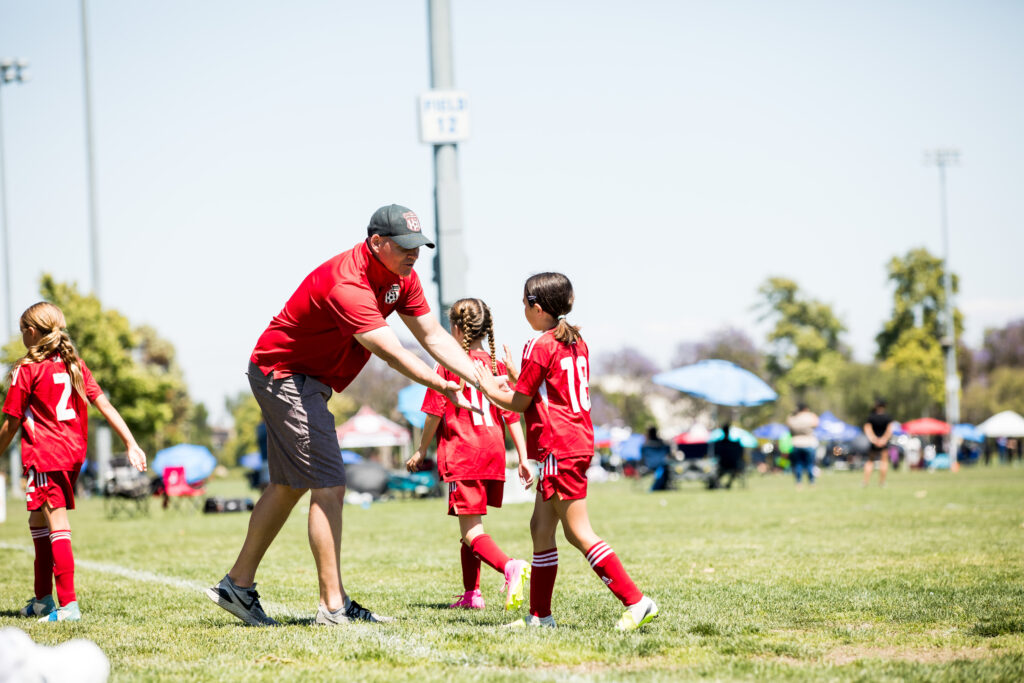
As I embark on the final few games of my daughter’s club career, I find myself thinking less about wins, losses, or leagues—and more about the journey.
She made the decision not to play in college, choosing instead a more traditional college experience. It was her decision, and one I fully support. That alone probably says more about this entire process than anything else I could write.
Looking back on 14 years of soccer (11 of them in club)—early mornings, long drives, sideline conversations, team changes all around us—I can say this: I’m grateful for the experience our family had. I’ve stayed connected to the game through coaching 7v7 girls teams, but my time as a soccer parent is coming to an end and our family is ending the journey on our terms.
And with that perspective, something becomes very clear, it really is about the journey and not the destitation.
Our family was one of the lucky ones.
Statistically, very few players stay in the game for over a decade. Even fewer navigate it without burnout, constant club changes, or walking away early. My daughter played competitively for more than 10 years—and did it all at one club.
That’s not the norm anymore.
And it forces a bigger question—the one most parents don’t stop to ask while they’re in it:
Do we actually understand what we’re chasing?

The New Accelerator: Social Media
It used to be simple.
You compared your kid to the team across town.
Now?
You’re comparing them to:
- Kids in different states
- Highlight reels from top clubs
- Commitment posts at 14
- Training clips that look like pro academies
And here’s what that creates:
A constant feeling that you’re behind.
Social media doesn’t just reflect reality—it distorts it.
You don’t see:
- The kid not playing
- The burnout
- The transfers
- The quiet doubts
You see:
- The jersey
- The badge
- The commitment graphic
So parents chase the same thing.
And players feel like they’re constantly being evaluated—not just by coaches, but by everyone.

The Part We Don’t Say Out Loud
Most girls are not going Division 1.
Most boys are not going pro.
But social media makes it feel like:
- Everyone is getting recruited
- Everyone is advancing
- Everyone is “on the path”
And that gap between perception and reality?
That’s where pressure lives.
The Part We Say Even Less: Whose Dream Is This?
Here’s the piece that quietly sits underneath all of this:
Does the player actually want it?
Not:
- “Do they like soccer?”
- “Are they good?”
- “Do they say they want to play in college?”
But:
Do they truly want the work, the setbacks, and the years it takes to get there?
Because here’s the truth most experienced families eventually learn:
If a player genuinely wants to play in college—they will find a way.
Maybe not Division 1.
Maybe not Power Four.
Maybe not the version parents imagined.
But they’ll find a level, a team and program that fits them.
Where It Breaks Down
The issue isn’t usually access.
It’s that somewhere along the way, the desire changes—or disappears.
And often, it’s because the goal was framed too narrowly, too early.
The “D1 or Nothing” Trap
Players grow up hearing:
- “She’s going D1.”
- “He’s on the pro pathway.”
So anything else starts to feel like failure.
And when reality shifts—as it does for most players—you end up here:
- A player who could play D2… but isn’t interested
- A player who could play D3… but feels like it’s beneath them
- A player who just quietly walks away
Not because they couldn’t play.
Because the version they were sold is gone.
The Europe Dream Problem (Boys Especially)
On the boys side, it often sounds like:
- “I want to play in Europe.”
- “I want to go pro.”
And again—nothing wrong with that.
Until that becomes the only acceptable outcome.
Because when that doesn’t materialize, the fallback options:
- College soccer
- Lower divisions
- Different pathways
Don’t feel exciting.
They feel like a step down.
The Girls Side: College is the Goal… But Which One?
For girls, the pathway is still centered around college (that does appear to be changing though).
But social media has turned recruiting into a performance:
- Early commitments
- Public announcements
- Constant comparison
And it reinforces one message:
“Higher is better.”
The Reality
- Division 1 is limited
- D2, D3, NAIA make up the majority of opportunities
But if a player grows up believing:
“D1 is the goal”
Then D2 doesn’t feel like a win.
It feels like settling.
The Trade-Off Nobody Talks About
When you chase top-tier clubs early:
- Rosters get deeper
- Playing time gets tighter
- Roles get smaller
And parents justify it because:
“It’s the best league.”
But here’s what matters more:
College coaches recruit players who play.
They want:
- Game film
- Decision-making under pressure
- Consistency over time
You don’t get that sitting.

And That’s Where You Lose Players
Not physically.
Mentally.
Emotionally.
They don’t want to keep going—not because soccer failed them…
But because the version of success they were chasing no longer exists.
The Boys Side: The Funnel and the Fallout
On the boys side, the same thing happens—just with a different label.
The dream:
Professional soccer.
The reality:
A very small percentage get there.
What Gets Sacrificed in the Chase
In pursuit of the “top pathway,” players often trade:
- Consistent playing time
- Confidence
- Freedom to develop
For:
- Status
- Exposure
- The idea of being in the “right room”
But development doesn’t happen from the sideline.
College is Still the Most Likely Outcome
For most boys, the realistic pathway is:
- College soccer (across all divisions)
- Or stepping away from the game
And just like on the girls side:
College coaches are not recruiting logos—they’re recruiting players.
They care about:
- Impact in games
- Tactical understanding
- Growth over time
All of which require one thing:
Minutes on the field.

What Athletes Say After the Fact
When you actually listen to players—not parents, not clubs—you hear a consistent theme:
“It got too intense.”
“It stopped being fun.”
“Everything felt like it mattered too much.”
“It wasn’t what I thought it would be.”
This isn’t just anecdotal.
Across youth sports, we’re seeing:
- Rising burnout
- Increased pressure tied to performance and visibility
- Kids asking for less intense environments
And here’s the part that sticks with you:
Very few say, “I wish I had chased a higher-level club earlier.”
This Isn’t Just Opinion
There’s a growing body of work around this:
- Range (David Epstein): early specialization isn’t always the answer
- The Talent Code (Daniel Coyle): development comes from deep practice
- Changing the Game (John O’Sullivan): adult pressure reshapes youth sports
- The Playmaker’s Advantage (Leonard Zaichkowsky): decision-making separates players
Different perspectives. Same conclusion:
Environment matters more than status.
So What Should Parents Actually Do?
This is where the mindset has to shift.
Because right now, too many decisions are being driven by:
- Optics
- Fear
- Comparison
Instead of reality.
A Better Way to Frame the Journey
For girls:
- Are we building toward a realistic college fit—or chasing a label?
For boys:
- Are we developing a complete player—or chasing a long-shot outcome?
For both:
- Are we choosing an environment that supports growth—or one that just looks good online?
And most importantly:
Does our player still want this?
Because the players who last—the ones who make it to 18 still engaged—aren’t always the most talented.
They’re the ones whose desire stayed intact.
Final Thought
Social media amplified the noise.
Club culture raised the stakes.
But underneath all of it, one thing still decides the outcome:
Does the player still want it?
Not the version you imagined.
Not the version Instagram shows.
The real version.
Because if they do—they’ll find a path.
And if they don’t?
No badge, no league, no “top club” is going to carry them there.
Enjoy the journey as that is really it for everyone - you can't play forever and when your player's time is done, I hope that you have what my family had and that is a lot of great memories because my player played, when not injured she played 75-90% of the minutes on every team she was on and frankly that's the goal - to play.